Since our establishment in 2000, Vision 2020 has brought together Australia’s eye health and vision care sector to drive change through advocacy, collaboration and a shared commitment to better eye health and vision care.
From influencing national policy and securing government investment to advancing research, accessibility and inclusion, our history reflects the collective efforts of our members, partners and the broader sector.
Explore the milestones and achievements that have shaped our journey and helped advance eye health and vision care in Australia.
1999
The World Health Organization and the International Agency for the Prevention of Blindness launch Vision 2020: The Right to Sight, with the aim of eliminating avoidable blindness by 2020.

2000
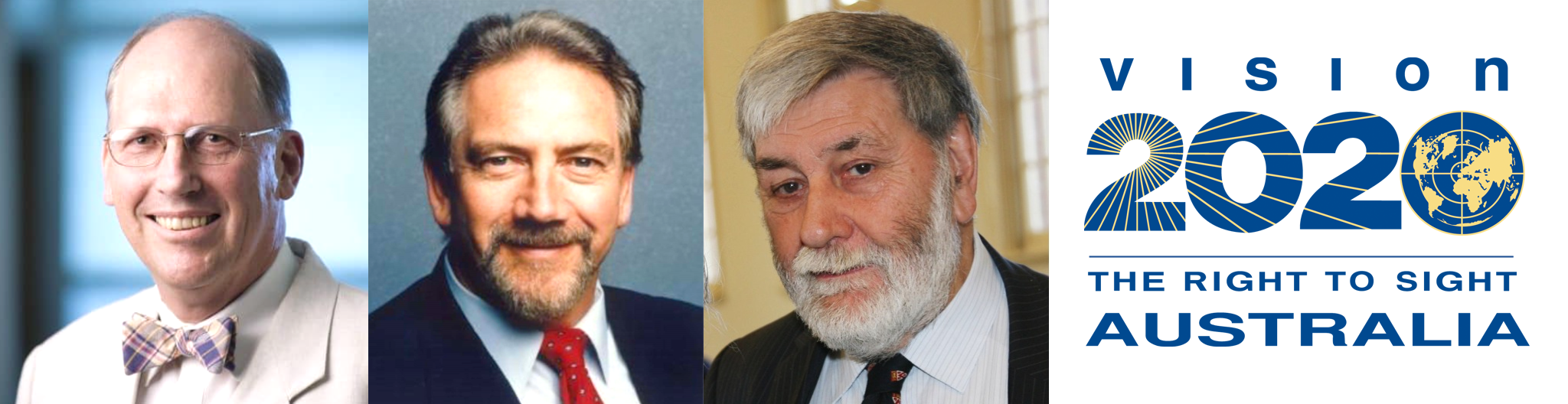
Vision 2020 is founded by ophthalmologist Professor Hugh Taylor and optometrist Professor Brien Holden. The Hon Dr Barry Jones is appointed as founding Chair in 2002.
2002
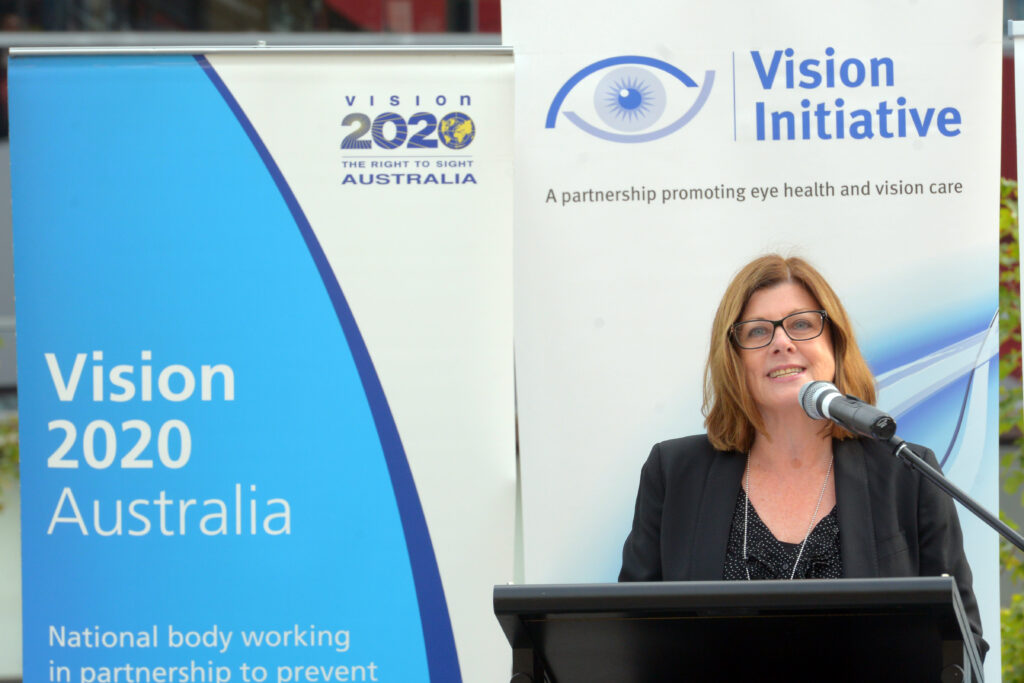
Vision 2020 establishes Vision Initiative in partnership with the Victorian Health Department. The program aims to increase the number of people having their eyes tested.

2004
Jennifer Gersbeck is appointed CEO, working with Vision 2020 until 2016. Subsequent CEOs include Judith Abbott, Patricia Sparrow, and now Carly Iles.
2005
Vision 2020 contributes to the report Investing in Sight – Strategic Interventions to Prevent Vision Loss in Australia, commissioned by the Centre For Eye Research Australia (CERA).
The report finds that for every dollar invested in prevention, a saving of around four dollars could be achieved over the lifetime of the people affected.
2007
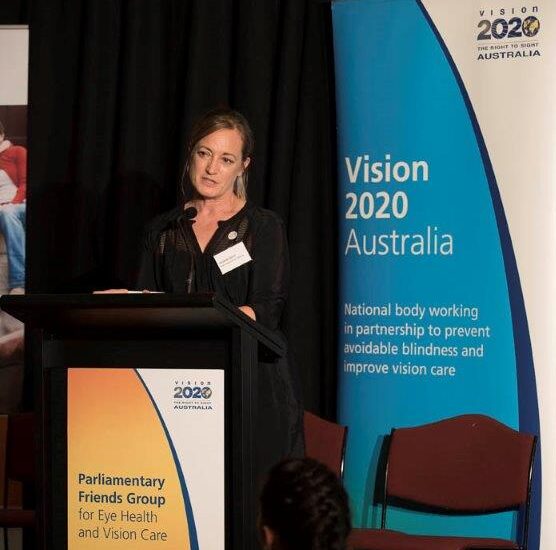
Vision 2020 establishes its Parliamentary Friends Group for Eye Health and Vision Care.
This annual event provides an important opportunity for our Members to directly engage Federal parliamentarians, bringing eye health and vision care issues to their attention.
2008
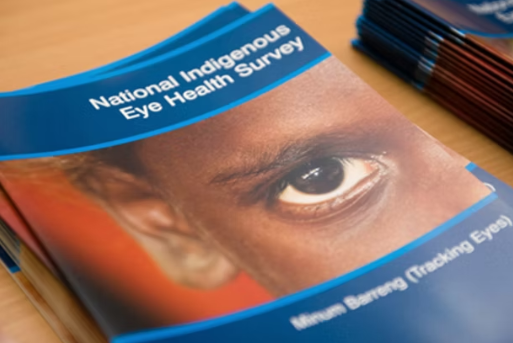
Co-founder and ongoing Board member Hugh Taylor steps down as Director of the Centre for Eye Research Australia (CERA), to start the Indigenous Eye Health Unit in the Melbourne School of Population and Global Health. The following year the two organisations publish Minum Barreng (Tracking Eyes) – the National Indigenous Eye Health Survey. The report finds blindness rates 6.2 times higher than in non-Indigenous people, and low vision rates 2.8 times higher.
2009
The Australian Government commits AUD$58 million over four years to tackle chronic eye and ear disease for Indigenous Australians, in response to advocacy by groups including Vision 2020’s Aboriginal and Torres Strait Islander Committee. Trachoma will be declared eliminated in Australia in 2026.
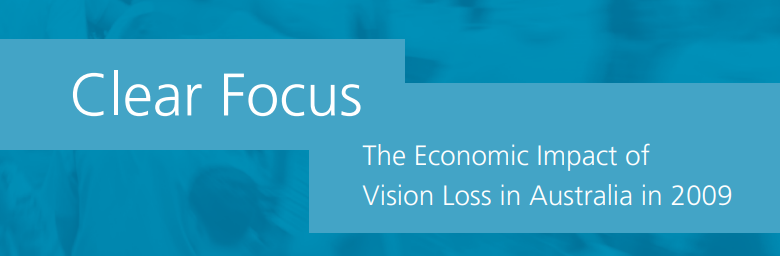
Vision 2020 commissions Clear Focus, an Access Economics report into the impact of vision loss in Australia. It finds that 66,500 Australians are blind, and estimates the annual cost of vision loss at $7.2 billion.
2010
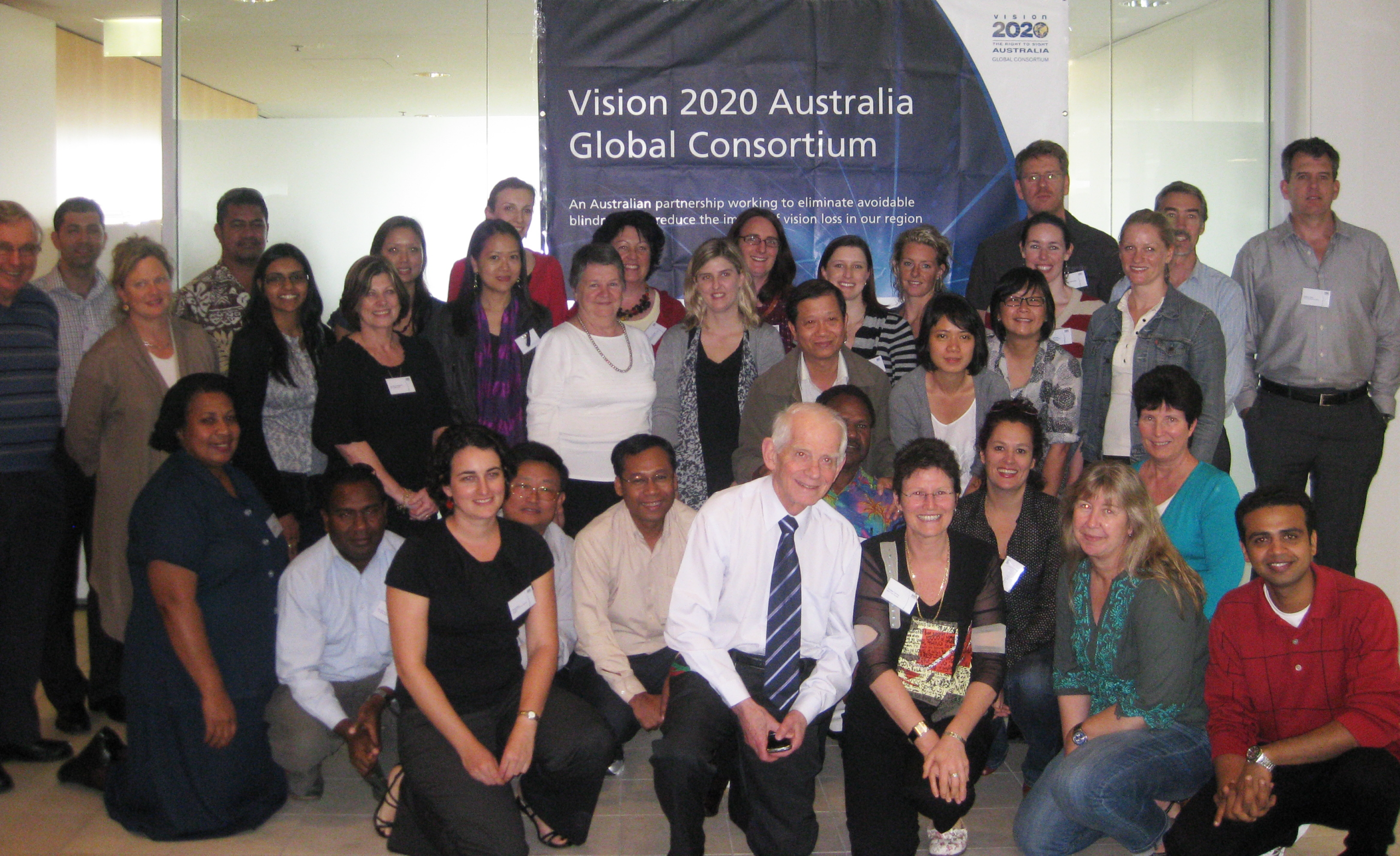
Vision 2020 convenes the Global Consortium — a partnership of nine leading eye health NGOs working to improve the long-term workforce development and training opportunities for the eye health sectors in Cambodia, Timor-Leste and Vietnam. Funding is provided by AusAID’s $45 million Avoidable Blindness Initiative.
2012
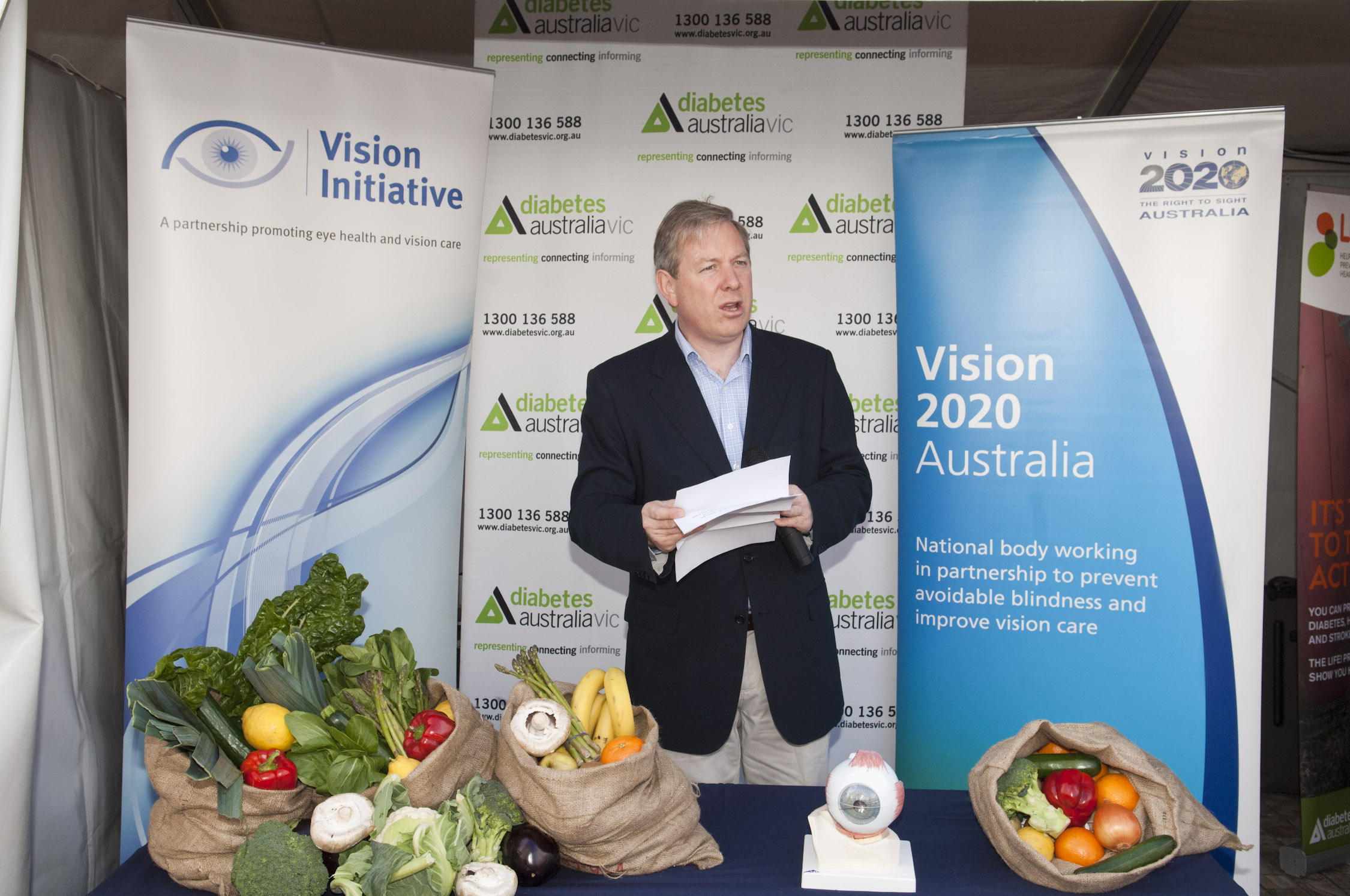
Vision Initiative receives $2.55 million in the Victorian Budget to encourage a coordinated approach between primary general health professionals and the eye care profession.
2013
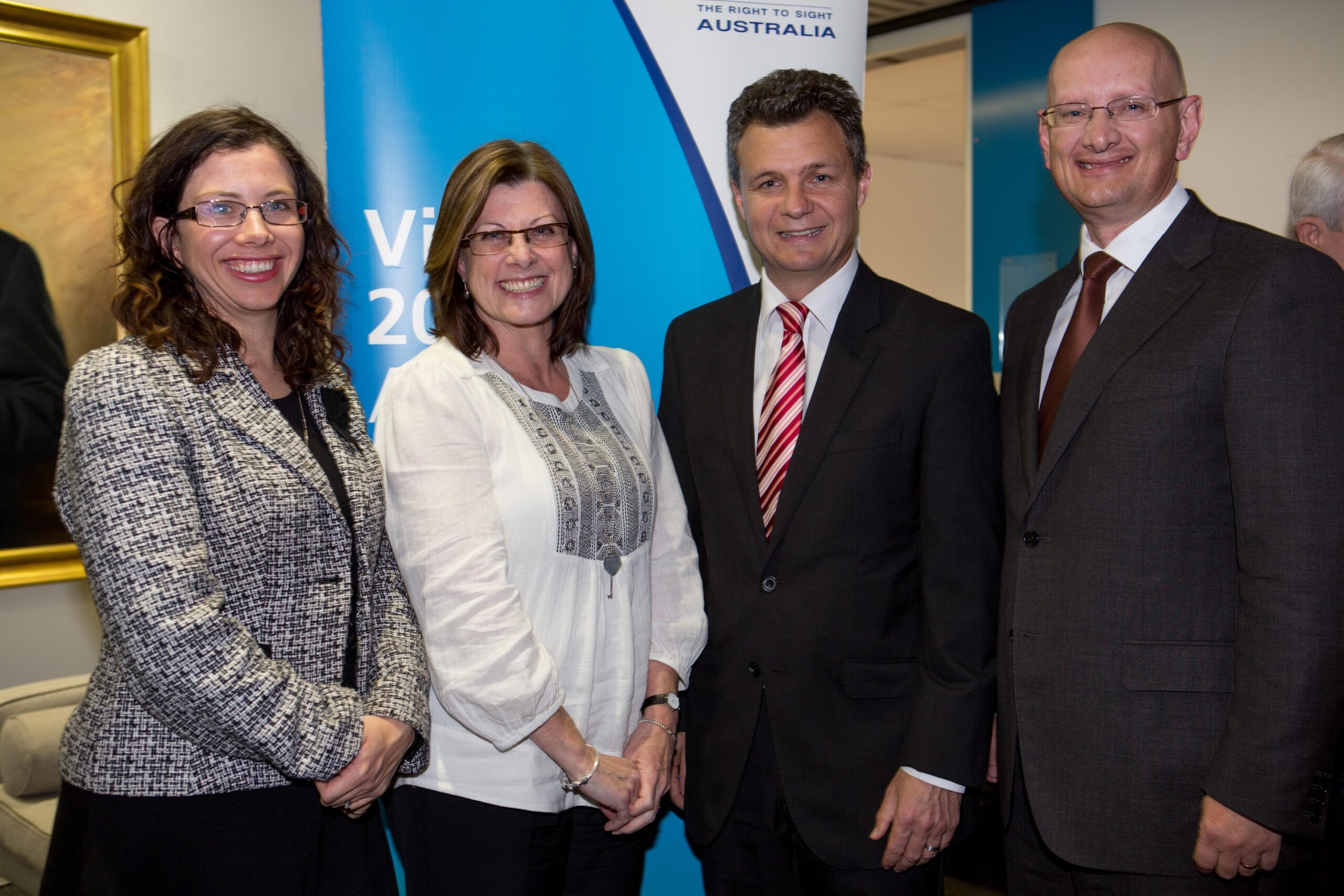
Vision 2020 is instrumental in progressing the implementation of the National Framework for Action to Promote Eye Health and Prevent Avoidable Blindness and Vision Loss, originally endorsed in 2005 by the Australian Health Ministers’ Conference.
2014
The Federal Government commits to funding the first ever National Eye Health Survey, after advocacy from Vision 2020 and CERA. The Survey will report in 2016, after assessing 4,836 individuals from metropolitan, regional and remote communities at a cost of $1.8 million.
The Hon Amanda Vanstone succeeds the Hon Dr Barry Jones as Chair of Vision 2020. The Hon Christopher Pyne will be appointed in 2020, and ex-MP Graham Perrett in 2025.
2015
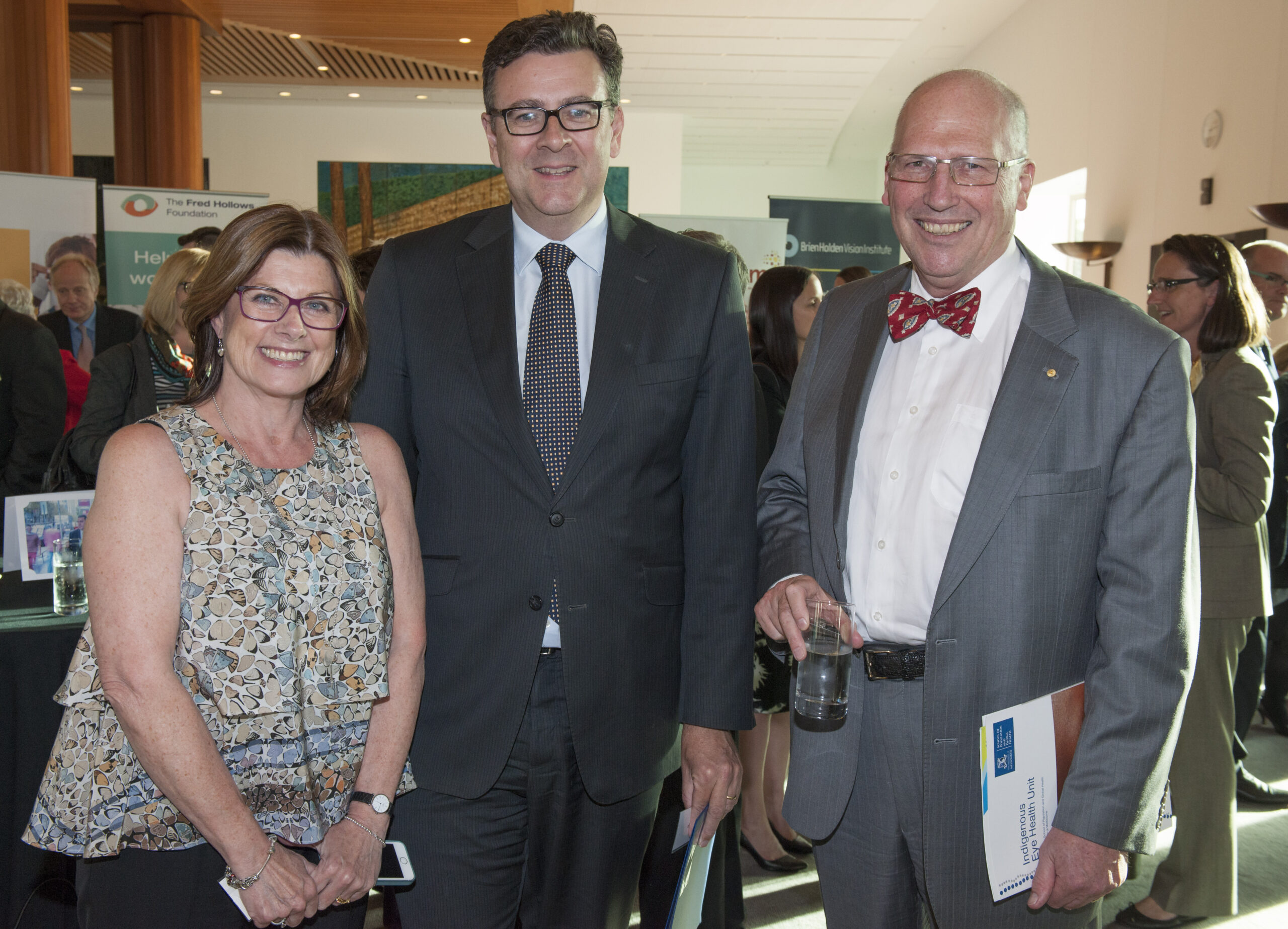
$6.6 million is allocated to Indigenous eye health, after collaborative advocacy by the vision sector including Vision 2020.
2016
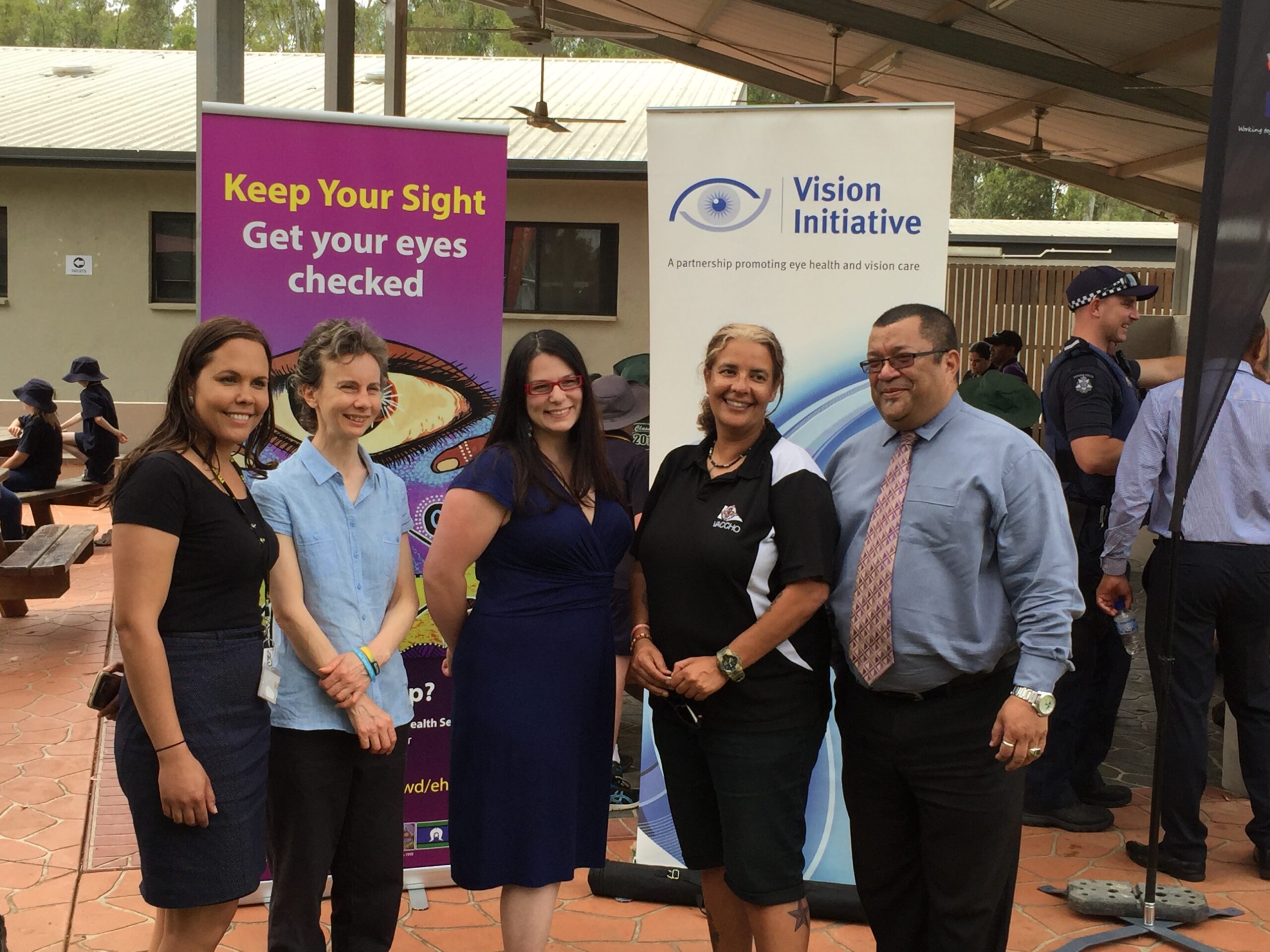
Vision Initiative receives a further $3.4 million from the Victorian State Budget to roll out its pilot program promoting eye screening.
2018
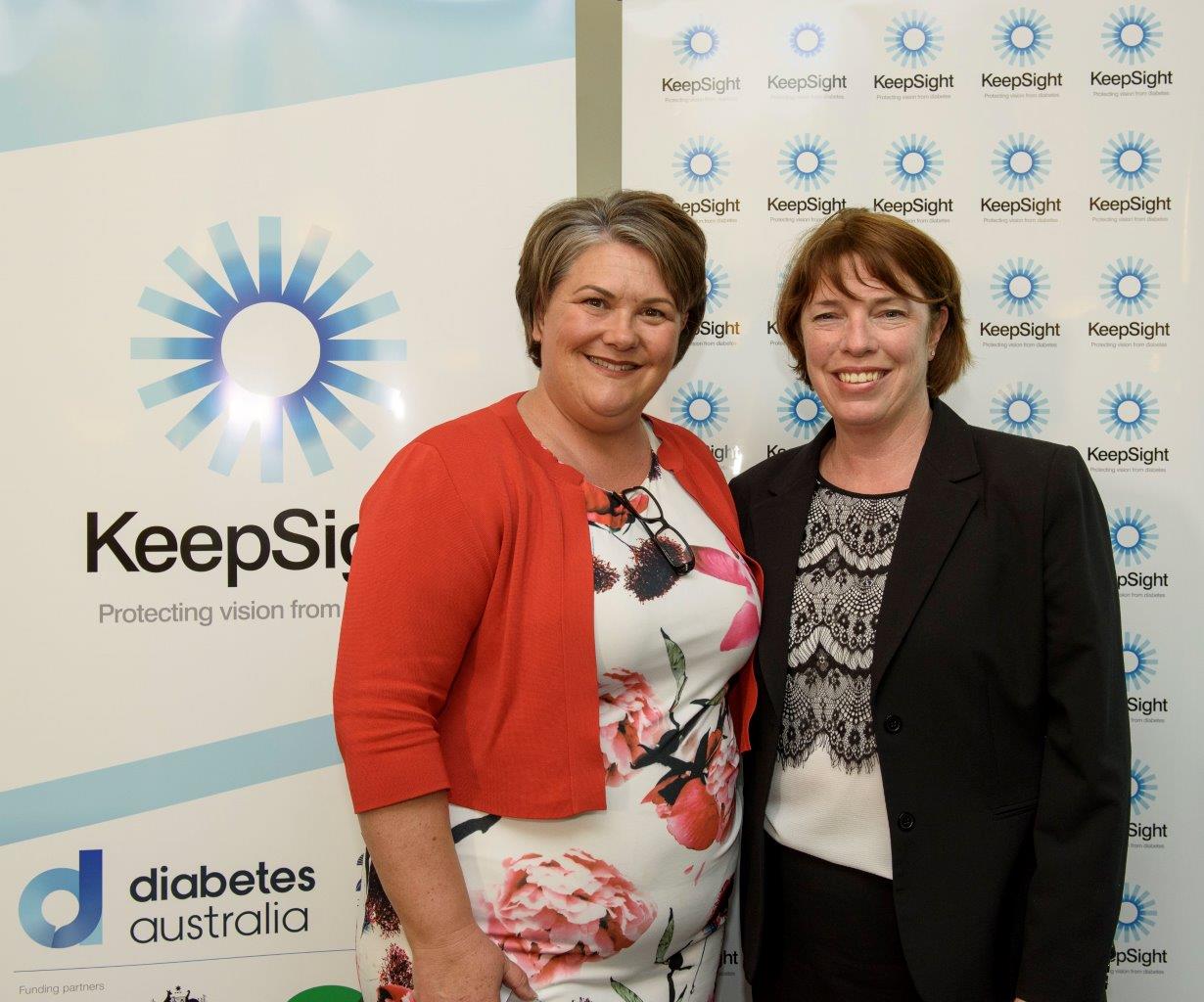
Along with Diabetes Australia, Oculo, and Specsavers, Vision 2020 sees funding secured for KeepSight – the free, national diabetes eye check reminder program.
$2 million is allocated to Vision 2020 Australia by the Australian Government, to enhance existing spectacle subsidies for financially disadvantaged individuals. It is anticipated that 10,000 Indigenous Australians will have improved access to spectacles.
2019
The Australian Blindness Forum joins with Vision 2020, furthering the latter’s advocacy on full inclusion and participation for people who are blind or have low vision.
2020
Vision Initiative partners with Quit, educating vision professionals about supporting patients to stop smoking.
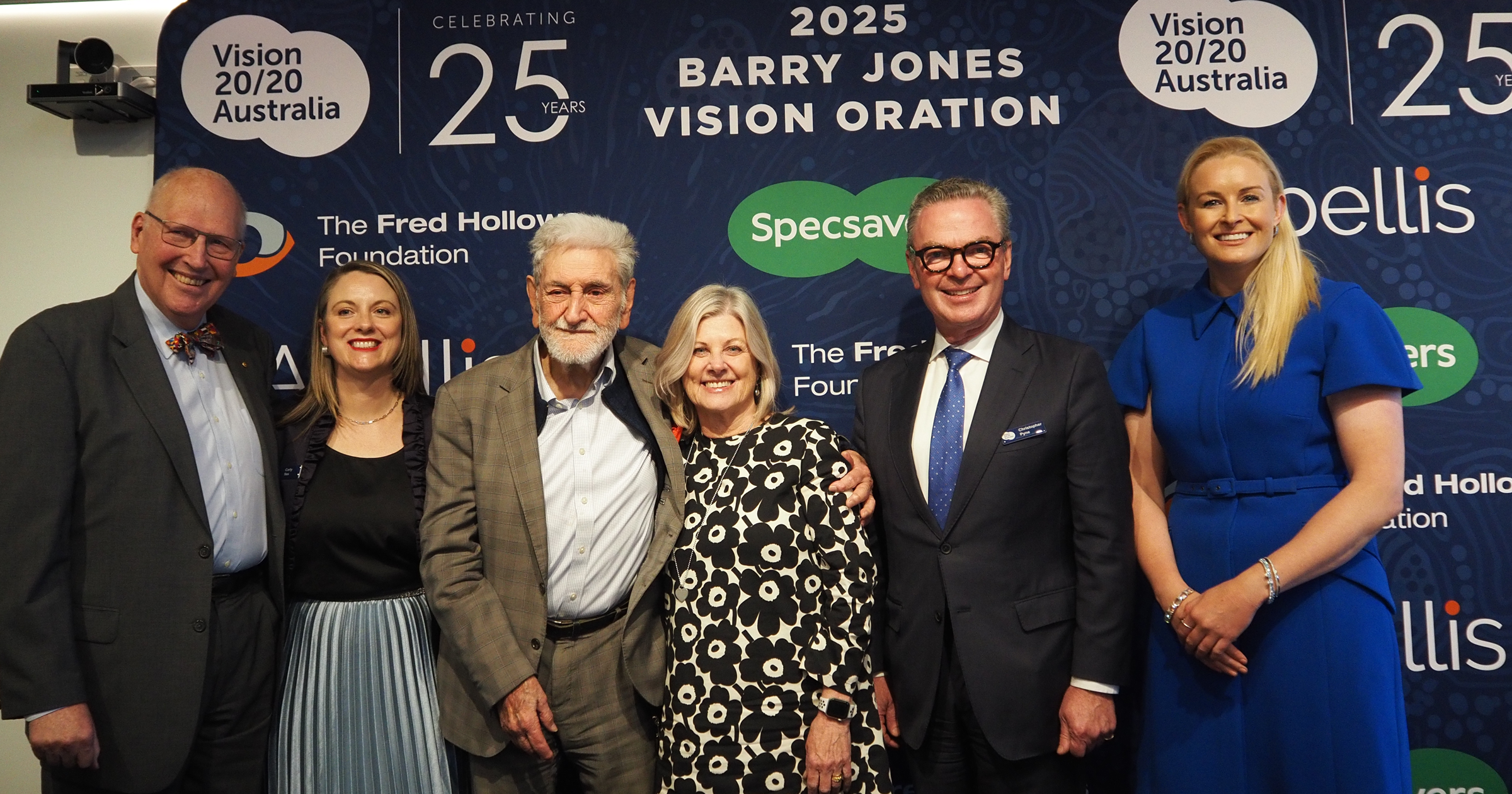
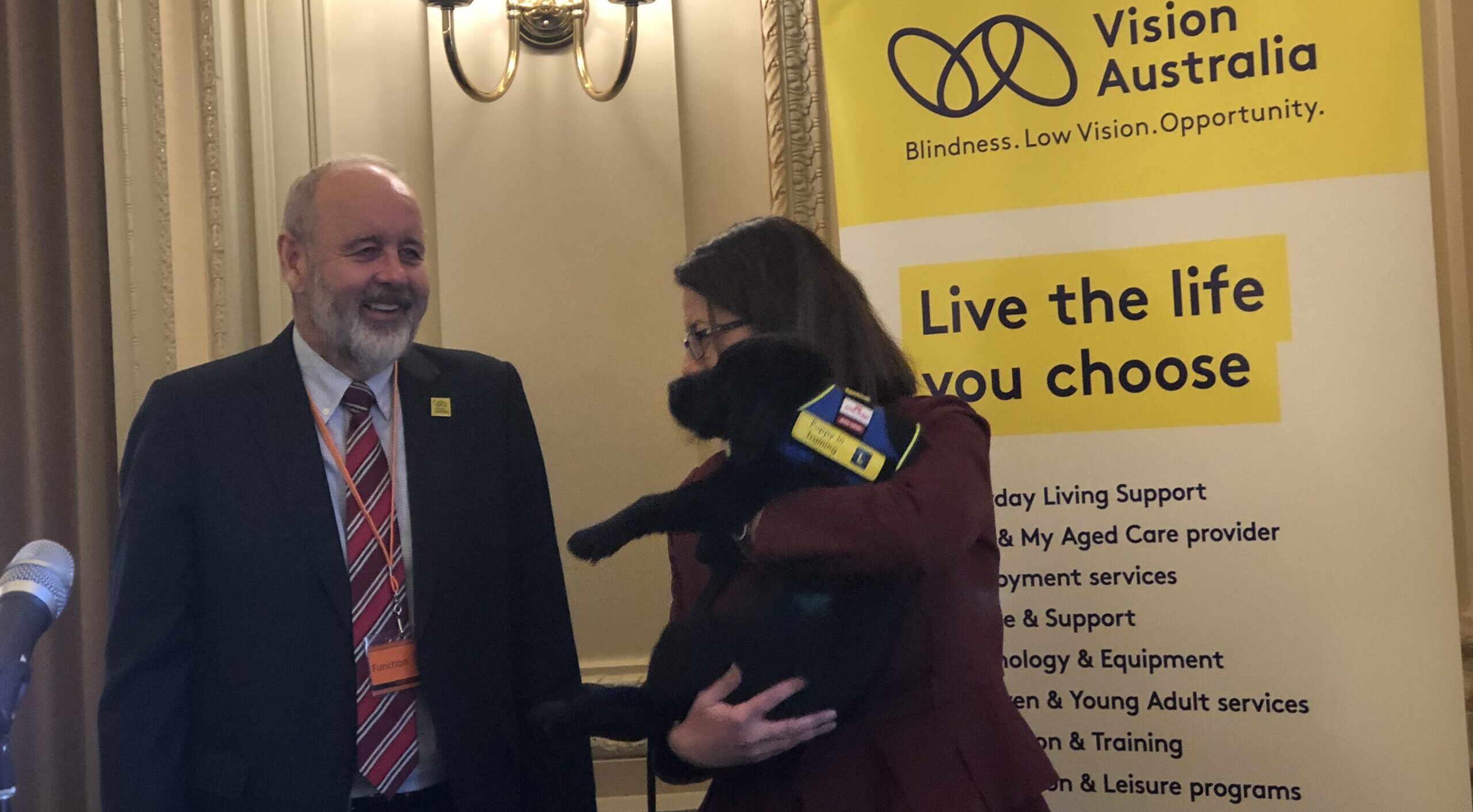
Vision 2020 establishes the annual Barry Jones Vision Oration. The inaugural lecture is delivered by Dr James Muecke AM, 2020 Australian of the Year.
2021
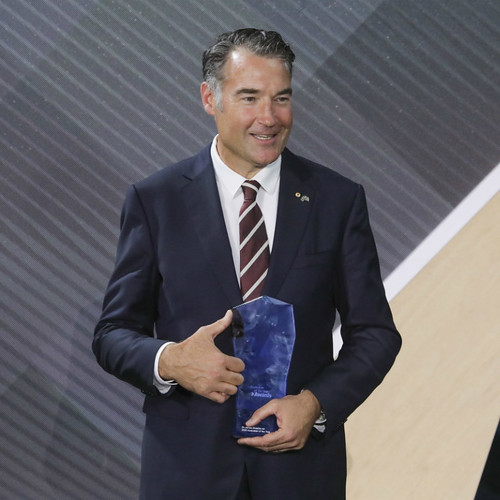
Vision 2020’s Federal Budget submission calls for 66,000 more public cataract operations to tackle extended wait times, with a briefing of the Prime Minister. The submission is based on a University of NSW report commissioned by Vision 2020.
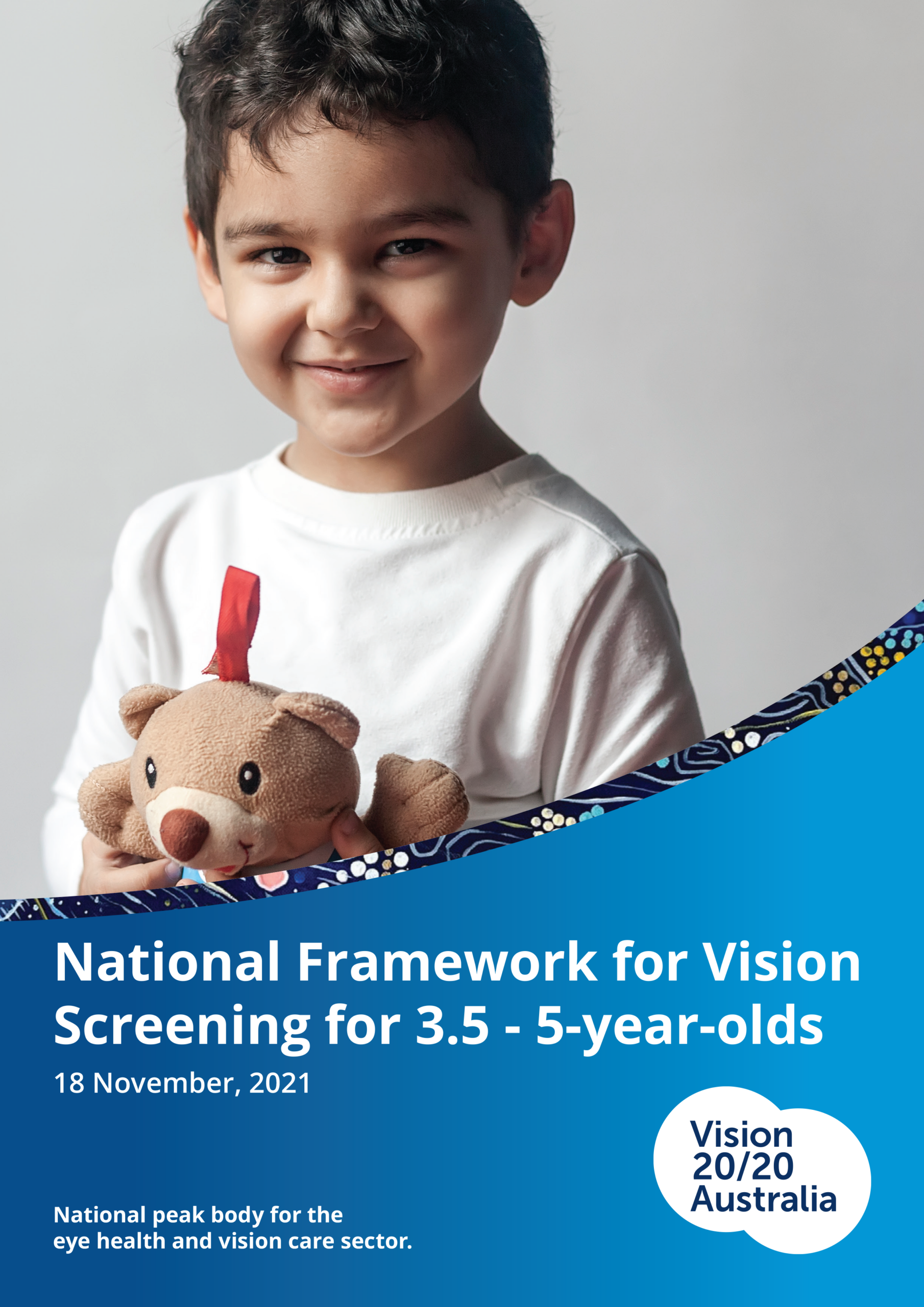
Vision 2020 releases its National Framework for Vision Screening for 3.5-5-year-olds.
2022
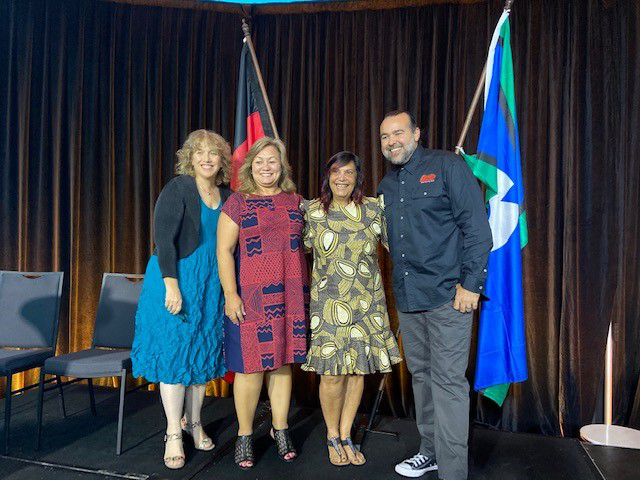
Vision 2020 launches its Reconciliation Action Plan.
2023
Vision 2020 hosts RANZCO and Optometry Australia leaders in discussion about collaborative care in eye health, and launches a Mental Wellbeing Resources Guide which compiles services and supports for people who are blind or have low vision.
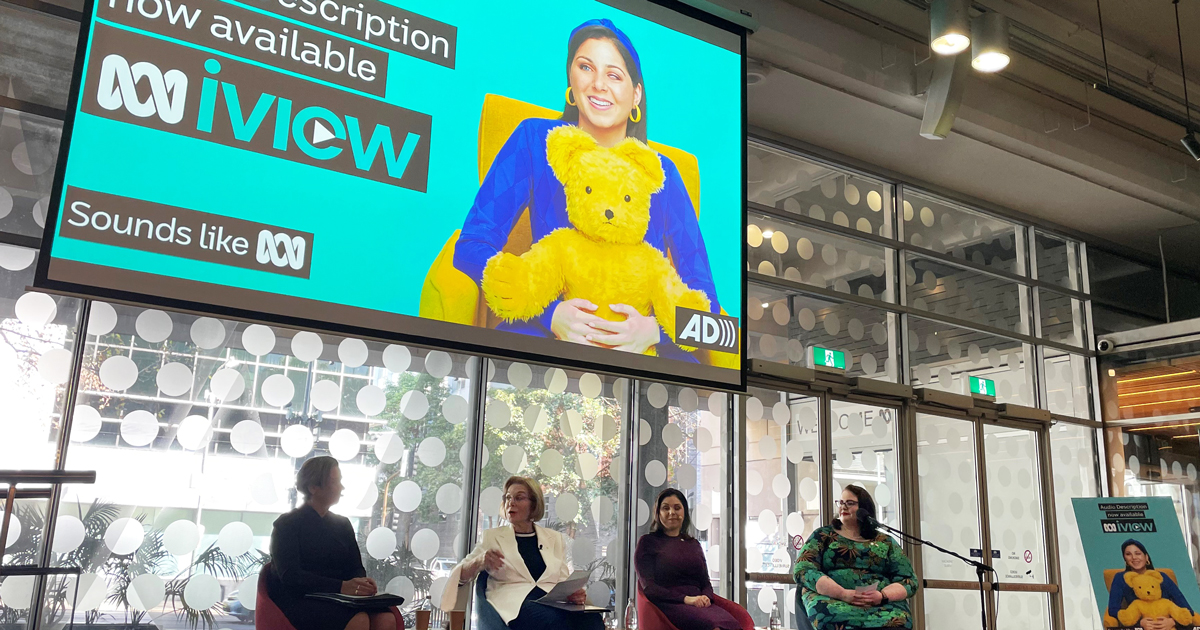
Vision 2020 supports the development and launch of Audio Described content on ABC iview.
Vision 2020 makes a detailed submission to the NDIS Review after extensive Member consultation.
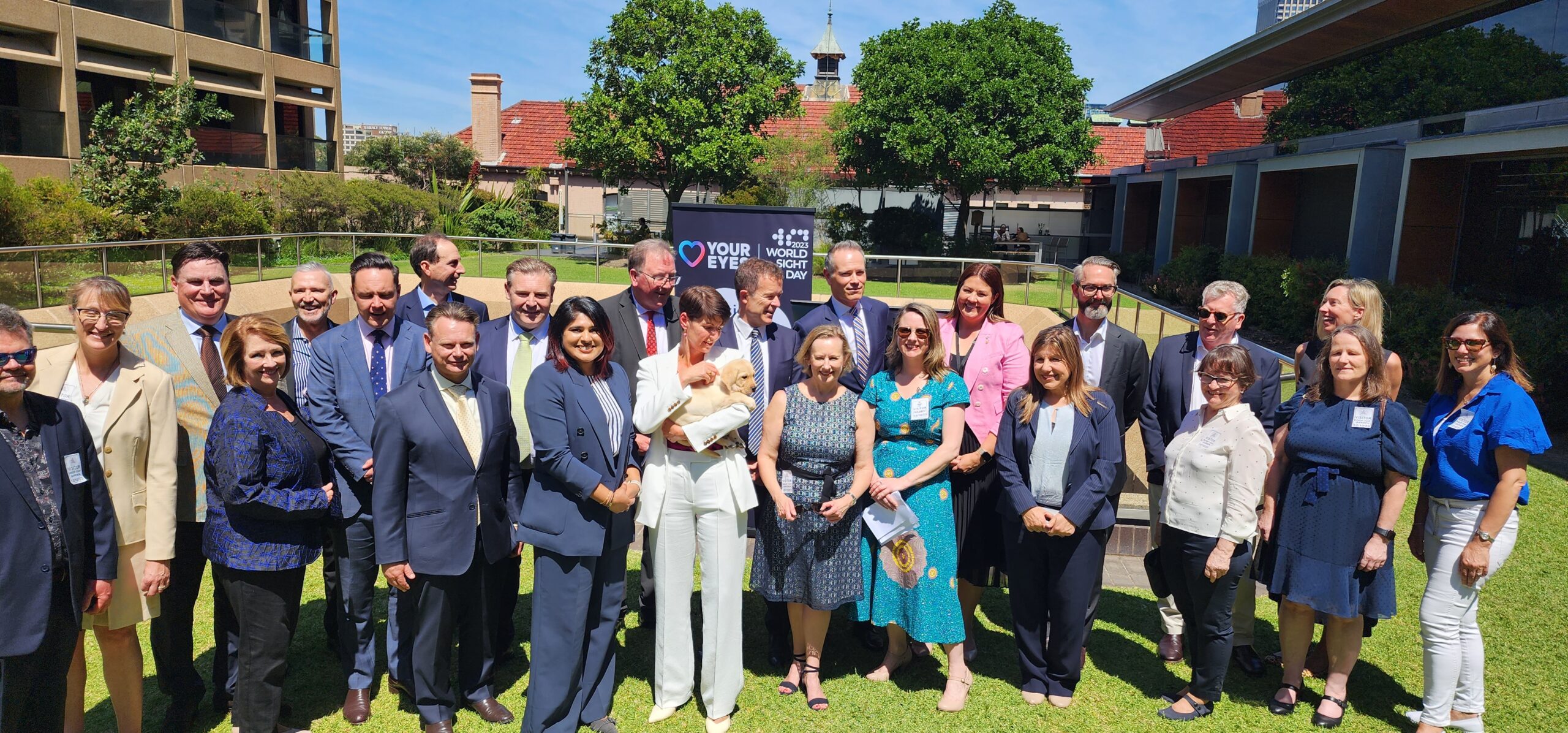
Vision 2020 continues its program of national and state-based vision screening for parliamentarians, as part of its advocacy and awareness-raising strategy. The NSW Parliamentary Friends Group for Eye Health and Vision Care is launched on World Sight Day.
2024
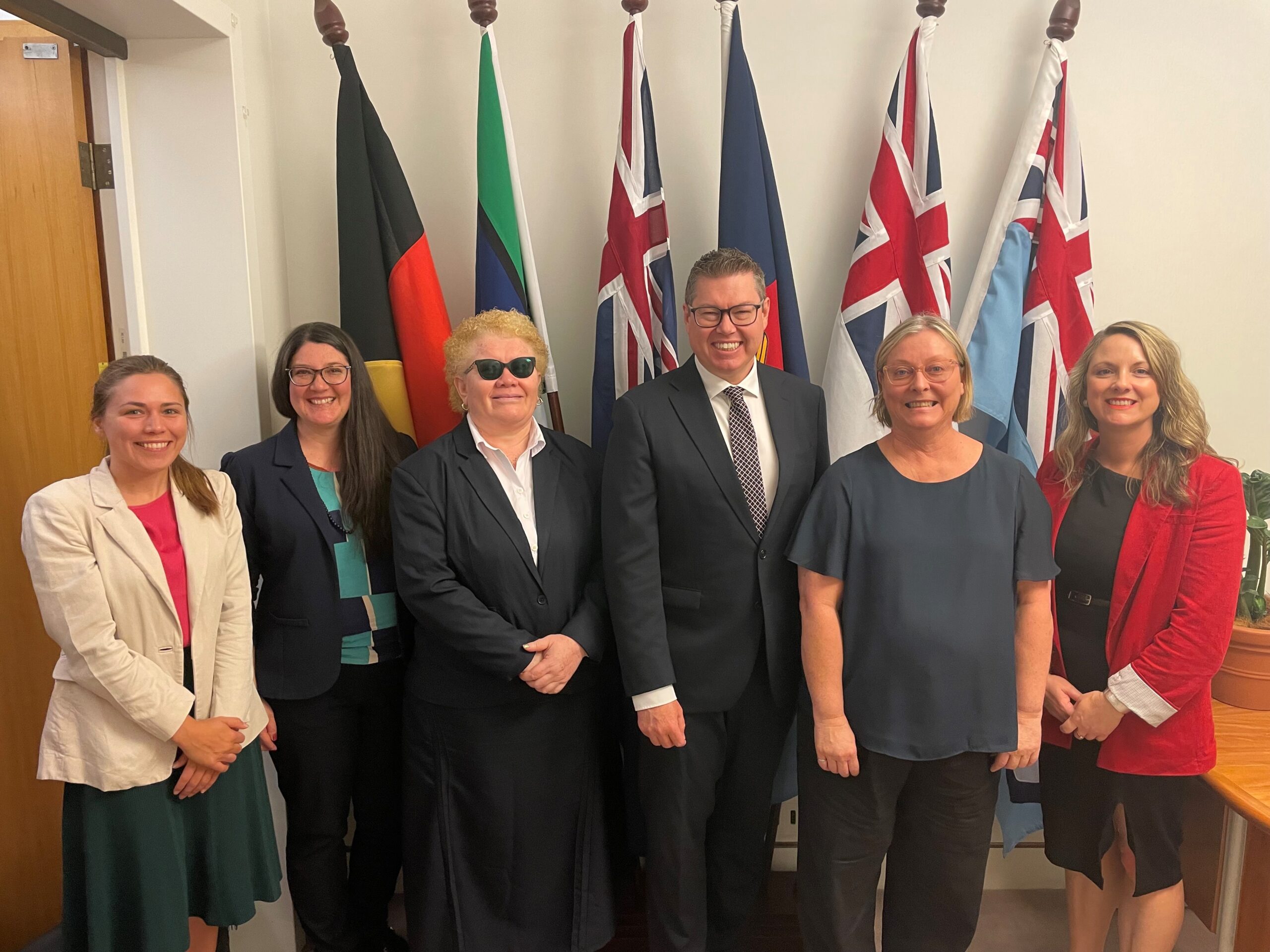
A key advocacy priority for Vision 2020 is realised with the Federal Government’s announcement of a $12 million investment to expand access to essential assistive technology (AT) across the Indo-Pacific.
Vision 2020 co-locates with Guide Dogs Victoria.
2025
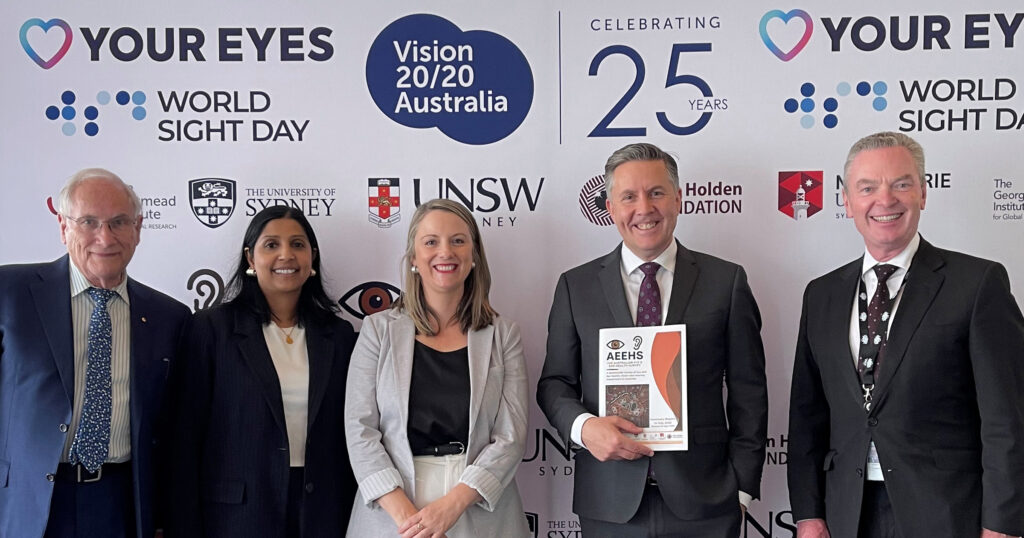
Vision 2020 hosts Health Minister Butler’s launch of the Australian Eye and Ear Health Survey. Led by Westmead Institute for Medical Research in response to Vision 2020 advocacy, the survey shows that First Nations peoples still experience vision impairment at 2.9 times the rate of non‑Indigenous Australians.
Vision 2020 forms an Advisory Committee to work in support of the First Nations Eye Health Alliance.
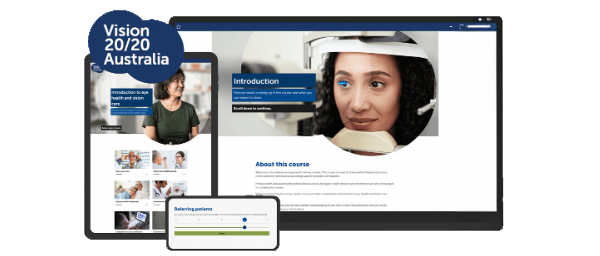
Vision 2020 partners with Mindtools Kineo to offer six free eye health and vision care modules for healthcare professionals.